

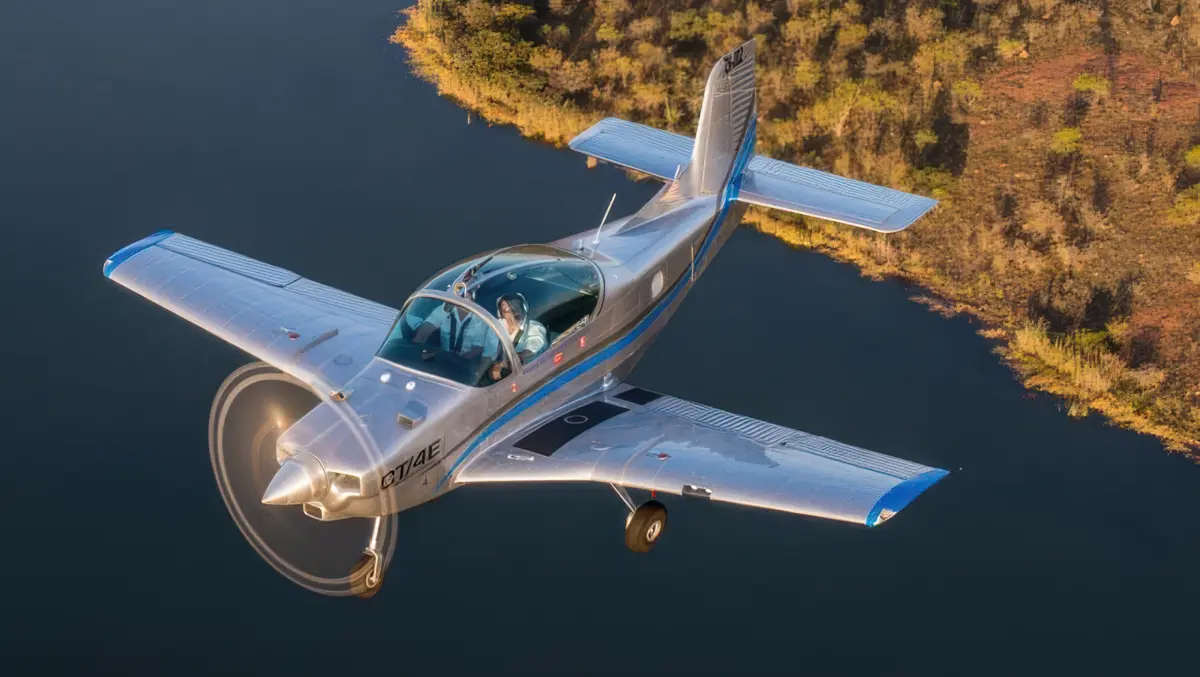
CT-4 Airtrainer marks 50 years shaping Asia-Pacific pilot training
Thu, 16th Oct 2025
A New Zealand-designed military training aircraft is being recognised by Australia's aviation sector, marking the 50th anniversary since its arrival in the country.
The CT-4 Airtrainer, developed in Hamilton in the early 1970s, has played a significant role in military flight training throughout the Asia-Pacific region. Over 150 units have been built and operated by air forces in New Zealand, Australia, Thailand, and Singapore. The aircraft has also been trialled by the United Kingdom, United States, Israel, and South Africa.
The Royal Thai Air Force has operated the CT-4 continuously since 1973, making it one of the longest-serving trainer aircraft in contemporary military aviation. The model has contributed millions of NZD dollars in export revenue for New Zealand and is still manufactured and serviced at NZAero's Hamilton facility, where its origin story began.
Earlier in the year, NZAero finalised a multimillion-dollar technology agreement with the Royal Thai Air Force. This deal will modernise the Thai Air Force's CT-4 fleet with digital avionics and other upgraded systems. New Zealand-built aircraft from the early 2000s will be retrofitted under the contract, supporting a new generation of Thai pilots and extending the type's 50-year service record.
Anniversary event
The Airtourer Association is marking the aircraft's milestone at a fly-in event at Tamworth Airport, which served as the base for the BAE Ansett flying school. The CT-4B variant was widely used there to train military and civilian pilots. Activities for the anniversary event include a mass flypast, guided historical tours, and the unveiling of a commemorative brass plaque by Tamworth Mayor Russell Webb.
Reflecting on the aircraft's impact, Stephen Burrows, Chief Executive Officer of NZAero, stated the CT-4's reputation and New Zealand's achievements in aircraft manufacturing.
"For fifty years, this aircraft has introduced thousands of pilots to flight. Its simplicity, aerobatic capability and reliability have made it a trusted platform for air forces and training schools worldwide.
He noted the recognition the aircraft has received from renowned aviators.
"Some of the most notable aviators to have flown the CT-4 include the late King of Thailand, who personally owned CT-4 serial number two, and generations of RNZAF Red Checkers, who made the aircraft their display team aircraft of choice from 1977 through to 2013.
Highlighting the aircraft's continued production and international reach, Burrows said,
"With more than fifty years of continuous service and production runs across three decades, the CT-4's story remains one of New Zealand's greatest export success stories in aviation engineering, a legacy that continues to inspire new designs from the same Hamilton factory that started it all. As we look ahead to the next generation CT-4G, it is fitting to honour the heritage of innovation and craftsmanship that has defined this aircraft for half a century."
Technical details
Burrows described what he sees as distinctive aspects of the CT-4's design for training purposes.
"The CT-4 was designed from the outset as a true training aircraft. It featured a jettisonable canopy that allowed flight crew to bail out safely in an emergency, and side-by-side seating with dual controls, which made instruction far easier than in tandem-configured trainers.
"The aircraft was fully aerobatic, capable of handling +6G and -3G manoeuvres, with an inverted oil and fuel system that allowed sustained aerobatic flight. Its tricycle undercarriage provided excellent ground handling and stability, and its all-aluminium construction gave it the durability and ease of maintenance needed for intensive training operations."
Since its first flight in 1972, the CT-4 has evolved through multiple variants. The original CT-4A was followed by models such as the CT-4E, which is powered by a 300hp Lycoming engine, with ongoing development for a Garmin-equipped CT-4G.
The CT-4's service life and export history highlight its role in shaping pilot instruction standards throughout the region and its ongoing legacy in military aviation training.