

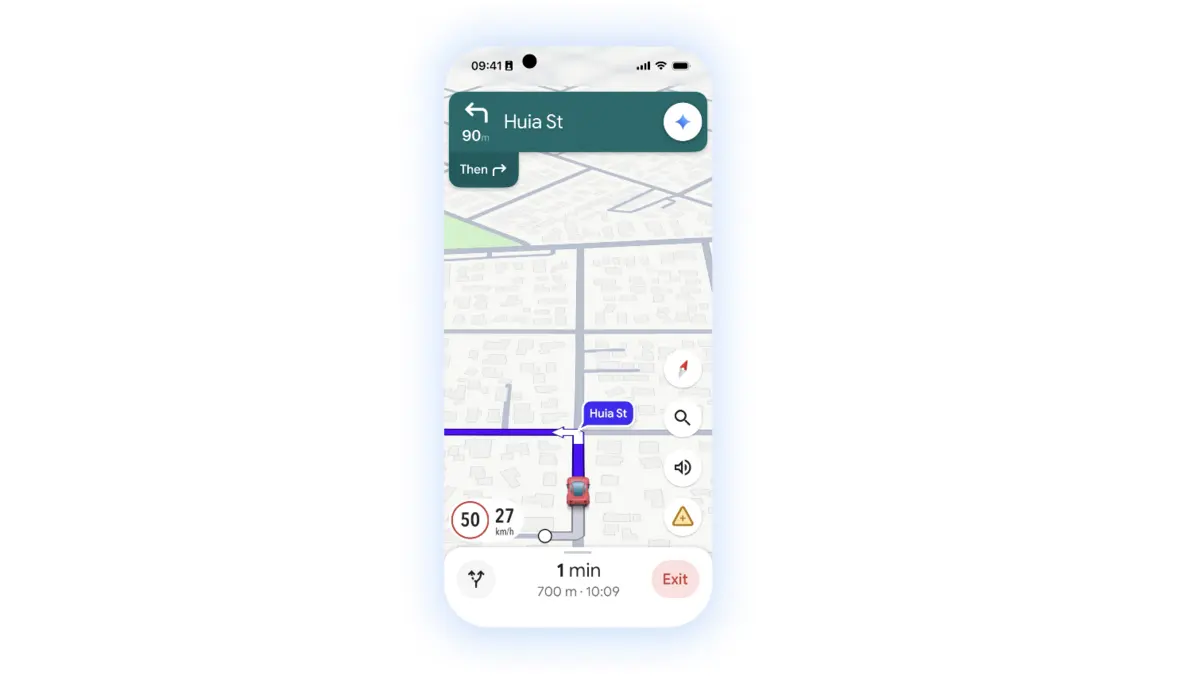

Google has introduced a new Google Maps navigation voice for users in New Zealand that speaks English with a Kiwi accent while accurately pronouncing te reo Māori place names, with availability expanding across Android, iOS, Android Auto and CarPlay.
The update is designed for people using Google Maps with their language set to English (New Zealand). It aims to deliver local pronunciation for cities and towns while maintaining English navigation guidance.
Local voices
The voice was developed to pronounce indigenous place names using advances in text-to-speech technology. It reflects the official status of te reo Māori in New Zealand and supports more accurate spoken navigation across the country.
Google worked with Te Taura Whiri, the Māori Language Commission, during development. The company also used publicly available New Zealand Geographic Board data to help build the voice model for city and town names.
"Māori place names carry stories that connect us to our histories, people and achievements. The first step to unlocking those stories is correct pronunciation. If we can hear the words said correctly, we can say the words correctly," said Ngahiwi Apanui-Barr, Chief Executive, Te Taura Whiri.
Data approach
Google said Māori data sovereignty formed part of the development process alongside its AI Principles. The text-to-speech model was created with plans for ongoing stewardship of language resources.
Initially, Te Taura Whiri will act as the kaitiaki, or guardians, of the te reo Māori lexicon used in the project. The longer-term objective is to establish a wider group of custodians responsible for maintaining the data.
Google said this approach is intended to support access to the language resources for Māori academics, researchers and communities while helping sustain future work involving the lexicon.
The company said the voice is intended to make spoken navigation sound more familiar for New Zealand users while preserving accurate pronunciation of Māori place names throughout journeys.
Rollout plans
The rollout is beginning globally for supported devices. Users can access the feature by selecting English (New Zealand) as their language setting within Google Maps.
The release follows work combining speech technology with language expertise to improve pronunciation during navigation. The feature covers place names including Taranaki and Whangārei, which Google cited as examples of locations requiring accurate pronunciation.
The update expands Google's local language support within Maps by applying speech technology to recognised geographical names. It also reflects collaboration between technology development and language expertise to improve spoken directions without changing the underlying mapping experience for users across supported platforms.
Google said the project focused on recognising the cultural significance of place names that appear throughout everyday journeys. The voice has been designed to pronounce those names consistently during turn-by-turn directions and other spoken navigation prompts. The company said users do not need a separate application to use the feature because it is delivered through Google Maps. Availability depends on supported platforms and the selected language setting, with the rollout occurring progressively for eligible users worldwide using compatible devices as update becomes available gradually.