

Google previews Android Halo for AI agents on Android
Tue, 7th Jul 2026
Google has previewed Android Halo, a new interface element for AI agents on Android. The feature is due to launch with Android 17 later this year.
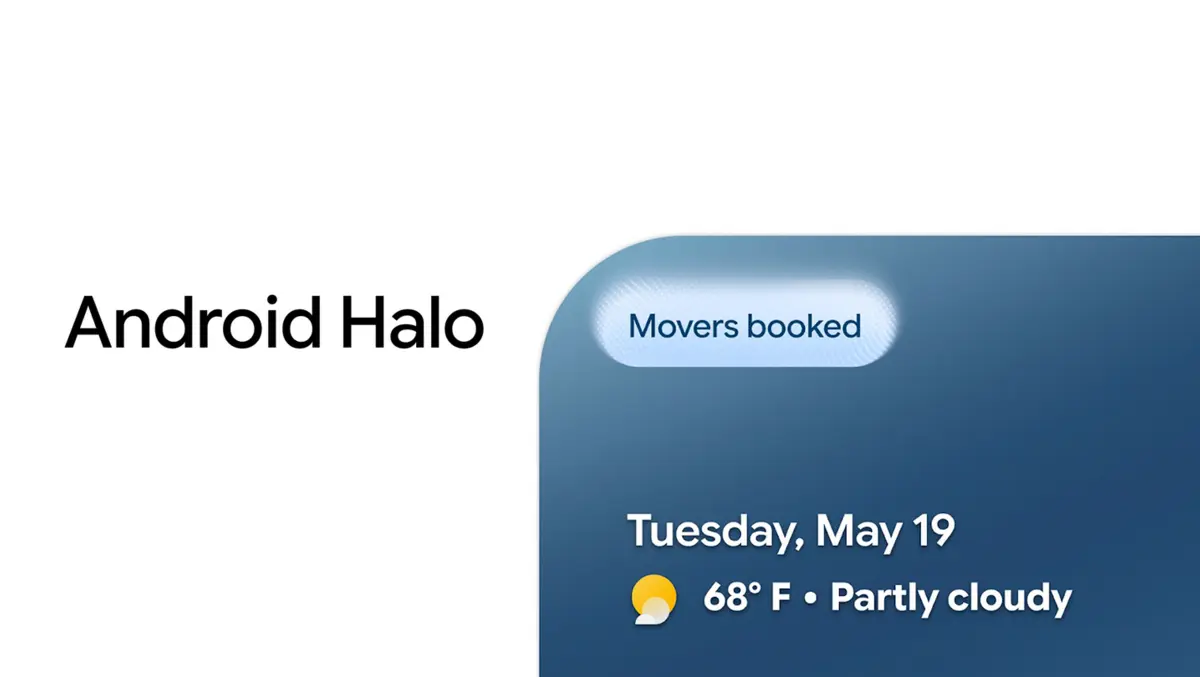
Android Halo is a dedicated space in the status bar that shows what an AI agent is doing and lets users respond without leaving their current screen. It will work with Gemini Spark and other supported agents, with added functions on selected devices using Gemini Intelligence.
The move adds a new layer to Android's AI strategy by giving long-running automated tasks a permanent place in the operating system interface. Instead of opening a separate app or interrupting the user's current activity, Halo is designed to surface updates, questions, and final results at the top of the display.
Sameer Samat, president of Android Ecosystem at Google, described the feature as part of a broader shift in how Google sees the platform. "Last week, we announced our vision for Android to move from an operating system to an intelligence system. And today at hashtag#GoogleIO, we shared an exciting next step to bring this to life with a preview of Android Halo. In a world of agents, your device will increasingly take on complex, long-running tasks - whether it's run directly on your device, in the cloud, or a mix of both. You may be planning a multi-city vacation, organizing a complex project or researching a topic. These tasks will take time to complete, and there may be instances where you have to interact with your agent to ask questions or confirm the actions it needs to take on your behalf. We're designing Android Halo to be a space in Android's UI where you can choose to keep tabs on those tasks. Halo can ask you for details to keep the task moving, track progress and notify you when it's done. Android Halo will officially launch later this year with an update to Android 17. It will work with Gemini Spark, and offer even more capability with Gemini Intelligence on our most advanced devices. And because Android is all about openness and choice, we'll also have an API so it can work with whatever agent you choose. I can't wait for you to try it!"
How it works
The feature is aimed at software tasks that may run in the background for some time. These could include planning trips, managing projects, researching a subject, navigating websites, or carrying out app-based actions that involve several steps and occasional user confirmation.
Android Halo is intended to act as a two-way communication layer for those tasks. An agent can post a status update, ask for more information, request approval for the next action, or report that a task has finished while the user remains in another app.
In a recorded discussion about Android 17, Samat also described Halo as a fixed location in the operating system for whichever assistant or autonomous agent a user chooses. "The way Android's handling this is we've announced this new concept called Android Halo and what Android Halo is it's it's a place a dedicated location in the status bar where your agent of choice Gemini or another agent can actually update you and get input from you on the task or tasks that you're having it do," he said.
Broader shift
The announcement reflects a broader effort by Google to build AI functions into the operating system itself rather than confining them to standalone apps or chat interfaces. Halo appears intended to serve as a native point for monitoring and managing agent-led workflows across Android.
That matters because many tasks now being assigned to AI systems are not instantaneous. If an agent is browsing the web, collecting information, comparing options, or carrying out a sequence of actions, the user may need intermittent updates rather than a single final answer. A persistent status bar element gives Android a standard way to present those interactions across devices and apps.
Google said Halo will also connect with a broader set of tools behind the scenes, including integrations based on the Model Context Protocol and features linked to Chrome's automated browsing functions. That positions the interface not just as a notification layer, but as a central point between the user and background systems carrying out work on their behalf.
Samat described that role more broadly when discussing the operating system's direction. "so these agents doing stuff in the background for you are going to want to like ask you a question or give you a update or show you the result or what have you and so you can follow along there and so we think that's like an interesting new spot for how computing may may evolve and the operating system makes it more seamless for you to engage with these things that are running longrunning tasks for you," he said.
Open access
Google also plans to provide an API for Android Halo, allowing developers to connect agents beyond Gemini. That could make the feature a shared system-level interface for third-party AI services as Android devices adopt more automated software tools.
The emphasis on openness suggests Google wants Halo to become part of the core Android experience rather than a feature tied only to its own assistant. Samat linked that approach to a broader model in which users state a goal and the agent decides which tools to use. "I see all of those kind of coming together under the agent you sort of tell Gemini hey I want to get this done and it figures out the best these are all become tools for that," he said.