

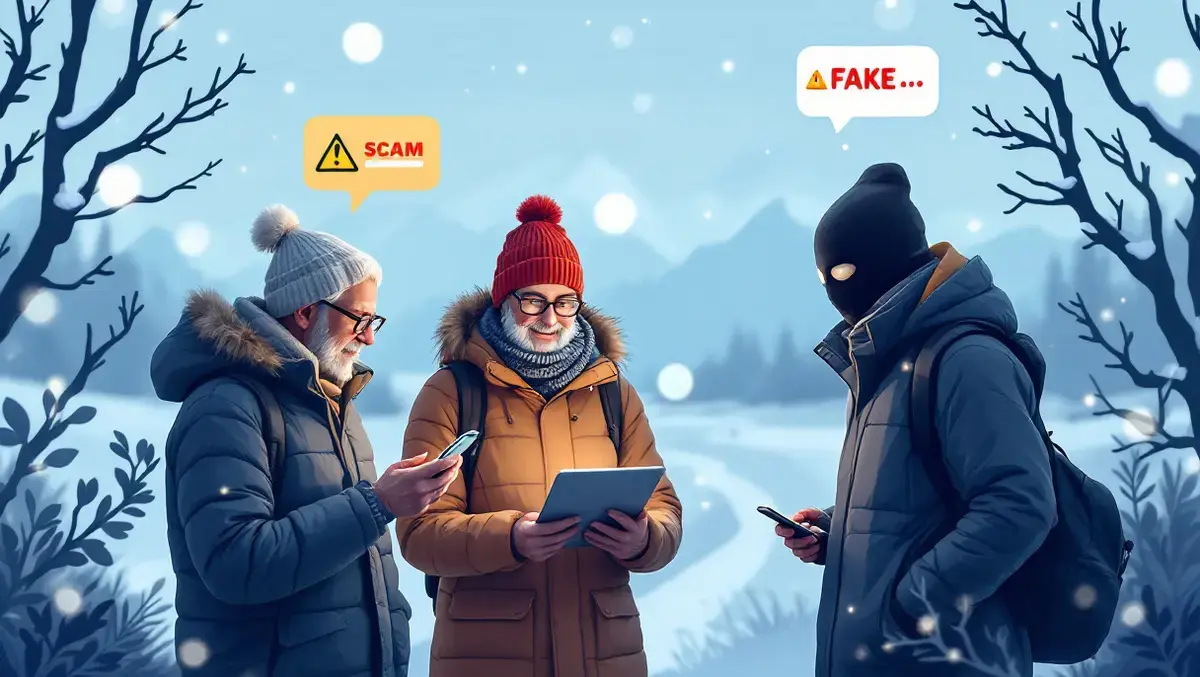

Norton has identified five scam types it expects to pose the biggest risk to New Zealanders this winter, based on scam activity that rose sharply in recent winters.
Its analysis found the steepest increase in financial scams linked to crypto and investment fraud, up 225% in winter compared with the average for the rest of the year. Imposter scams rose 128%, while tech support scams increased 115% over the same period.
The findings come from analysis by Norton's Threat Labs team of scams blocked across its global network during the winter months of 2024 and 2025. The pattern suggests a seasonal rise in scam activity as more people spend time online in colder months, including searching for travel deals or investment opportunities.
The five scam categories highlighted for New Zealand were crypto and investment fraud, imposter scams, tech support scams, lottery and sweepstakes scams, and what Norton called the reservation hijack scam.
Financial scams showed the biggest increase. Fraudsters typically use fake trading platforms, promises of guaranteed returns, and so-called recovery schemes targeting people who have already lost money.
One tactic involves building trust over time through dating or networking platforms before directing a victim to a private group, app or website. Victims may see apparent gains on a dashboard and even withdraw a small amount, only to lose access to larger sums after investing more heavily.
Investment scams are often linked to romance scams because victims may make faster decisions when emotionally involved. Offers described as risk-free or guaranteed should be treated as a clear warning sign.
Imposter scams were the second-fastest growing category in the winter data. In these schemes, fraudsters pose as relatives, friends or government agencies, sometimes using cloned phone numbers and AI-generated voices to create urgency.
Voice cloning has made these approaches more convincing, particularly when a caller appears distressed and asks for immediate financial help. Norton advised people to hang up and call back using a known number, rather than respond through a link or return call generated by the original contact.
Older victims
Tech support scams also rose sharply, with more than 16,000 such attacks blocked in New Zealand during winter 2025. These scams often begin with a browser pop-up warning of a virus and displaying a phone number for supposed technical help.
Once contact is made, the scammer may ask for remote access to a computer, install malicious software or demand payment for fake repairs. In some cases, victims are persuaded to transfer money on the false claim that it is needed to protect their bank account.
Older people were disproportionately affected by this type of fraud. Many victims are aged over 60 and may be more vulnerable because they are retired, rely on savings and are less familiar with online threats.
Lottery and sweepstakes scams also rose in winter, though by a smaller margin than the other leading categories. More than 4,000 unexpected money scam attacks were blocked in New Zealand over winter 2025, up 55% on the average for the rest of the year.
These scams generally claim the recipient has won a prize, gift card or giveaway, then ask for a processing fee, tax payment or shipping cost before the reward can be released. Any request to pay in order to receive winnings should be treated as fraudulent.
Travel angle
The final category in the winter forecast centred on travel bookings. Fraudsters are using stolen reservation data to impersonate accommodation providers and seek payment details from travellers.
According to research by Gen, Norton's parent company, investigators identified 353 fraudulent landing pages linked to about 350 separate accommodations and 38,000 rooms worldwide. In these cases, travellers receive a message that appears to come from a booking platform and refers to a payment problem, prompting them to re-enter card details.
Messages of this sort can look legitimate because they include correct booking information. Norton advised consumers to avoid clicking links in such communications and instead log in to booking platforms manually or contact accommodation providers through official channels.
The company also listed broader warning signs, including unsolicited requests for payment, strangers trying to build trust quickly, and messages that use genuine personal information to appear authentic. Accurate details should not be taken as proof that a message is genuine.
Mark Gorrie, Vice President APAC at Norton, said: "The cold and wet winter is already here, and scammers were ready for it. We spend more time searching online, some of us chasing a warmer holiday, others looking for a better return on their money. That's why the scams hitting Kiwis run from fake investment platforms to reservation hijack scams. With AI, scams are cheap to make and deploy, and easy to make convincing. The lesson is simple. Before you pay anyone, stop and ask yourself why you're paying this money to this person, every single time."