

Dunedin startup Neumic seeks GBP £1 million for brain tech
Mon, 23rd Nov 2026 (Today)
Neumic Therapeutics is seeking about $1 million in pre-seed funding. The Dunedin startup is commercialising brain treatment technology developed through more than 20 years of research at the University of Otago.
The company is entering a field attracting growing international investor interest, particularly in focused ultrasound for brain health. It has developed and tested its core acoustic technology and is now raising funds to build an integrated wearable device and move towards clinical testing.
Neumic has also signed a Heads of Agreement with the University of Otago, setting out a pathway to an exclusive licence for the underlying intellectual property. The research behind the technology has received $19 million in public funding, including a $10 million MBIE Endeavour programme that runs until September 2027.
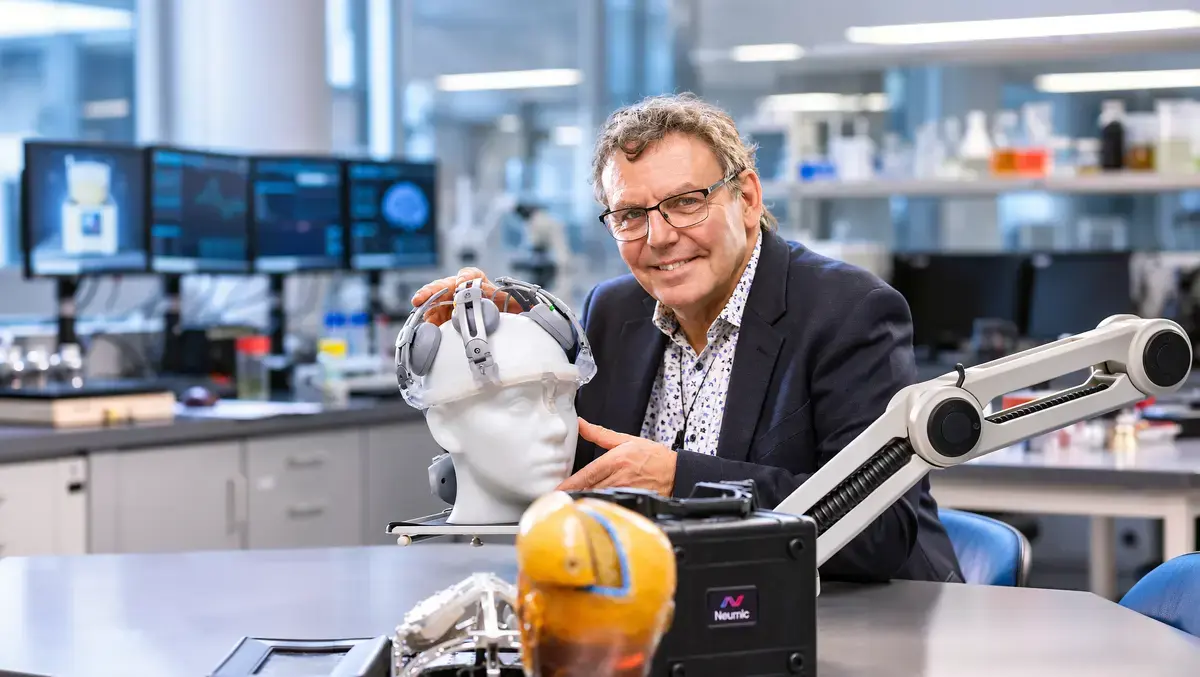
Its technology uses targeted ultrasound to influence brain activity and deliver medication to selected parts of the brain without surgery. The company is developing two treatment approaches on the same platform: neuromodulation, which uses low-intensity ultrasound to affect specific neural circuits; and targeted drug delivery, in which ultrasound triggers the release of medication from carriers such as liposomes at chosen locations in the brain.
Focused ultrasound has already been used in more than one million patient treatments worldwide, according to the US-based Focused Ultrasound Foundation. Most clinical use has involved high-intensity ultrasound, which can heat or destroy tissue without conventional surgery. Newer work in low-intensity ultrasound aims to influence neural activity or support localised drug delivery without destroying tissue.
That distinction is central to Neumic's commercial case. Greater precision over where and when treatment acts could improve results while limiting side effects elsewhere in the body, particularly in neurological conditions where existing medicines can affect wider brain systems.
Professor John Reynolds, Co-Founder and Chief Executive Officer of Neumic, said rising overseas investment validated the market direction. "We're seeing serious investment going into focused ultrasound internationally and that's exciting because we've been working on the underlying science here in New Zealand for more than 20 years. We've demonstrated the potential of our technology in preclinical studies and we now have an opportunity to translate that into a commercial platform and compete internationally."
One of the main technical barriers in the field is that the skull can distort sound waves, making accurate targeting difficult. Neumic is developing patient-specific software that combines medical imaging, mathematical modelling and AI to guide treatment.
Clinical focus
The first planned clinical application is severe tinnitus, a condition marked by persistent ringing, buzzing or other sounds that can affect sleep, concentration and wellbeing. Neumic is developing a clinic-based treatment designed to use focused ultrasound to influence the neural circuits associated with tinnitus, with a first human clinical trial targeted for 2028, subject to development, safety and regulatory requirements.
Its longer-term plan is to develop wearable treatments for Parkinson's disease. In that programme, focused ultrasound would be used to control where and when dopamine-acting medication is released in the brain.
Reynolds said the aim was to improve the precision of neurological treatment. "Many neurological treatments affect much more than the particular part of the brain we're trying to treat. Our research is focused on delivering treatment to precisely the right part of the brain, at the right time. That's the opportunity we're working towards."
Founding team
Neumic's founding team combines academic neuroscience with medical technology commercialisation experience. Alongside Reynolds, the group includes Co-Founder Alex Sweetman, Chief Operating Officer, and Ralph Highnam, who previously co-founded breast screening software company Volpara Health and led it as Chief Executive Officer for 13 years.
Volpara was acquired by South Korean AI company Lunit in 2024 for nearly NZ$300 million. That experience gives Neumic access to expertise in clinical development, intellectual property strategy and international medtech growth.
Highnam said scientific results alone were not enough to build a medical technology company. "The science is critical, but commercialising medical technology requires much more than a promising discovery. You need defensible intellectual property, a credible clinical development pathway, the right commercial expertise and access to capital. Neumic is bringing those pieces together at a time when international interest is accelerating."
The pre-seed round is intended to fund the next stage of development, including integrating the technology into a wearable format and preparing for clinical work. Sweetman said the raise would help convert years of publicly funded science into a business with international reach. "We're a small company entering a field attracting serious international capital. We've got a very strong scientific foundation, a multilayered IP portfolio and a founding team with experience in both neuroscience and building successful global medtech businesses. What we're looking for now is the capital to take the next step."