

NOVBYX unveils prototype e-bike with new frame design
Fri, 9th Oct 2026 (Today).webp)
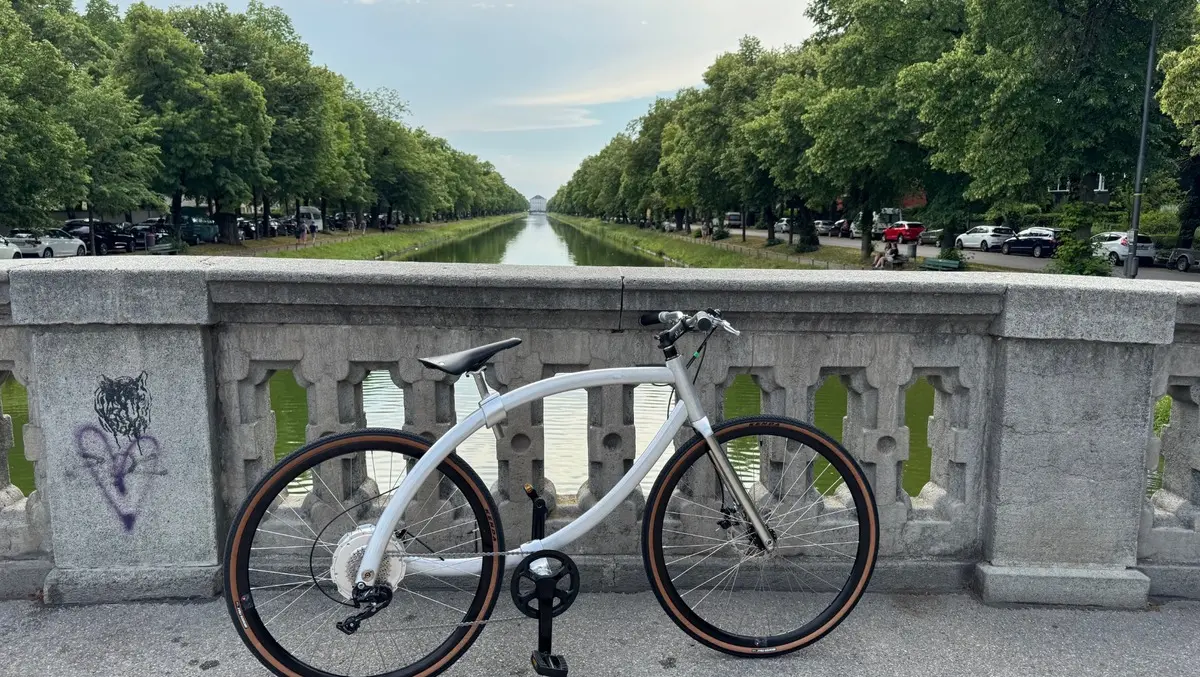
NOVBYX has presented a prototype electric bicycle built around a different primary frame architecture. The project remains in pre-production and is undergoing testing and technical validation.
The Polish father-and-son team of Tadeusz and Filip Lacny is developing the bicycle around continuous structural profiles and precision mechanical interfaces in the main frame. A physical prototype has been built, and work is continuing to turn the concept into a repeatable product.
Tadeusz Lacny designed the project, while Filip Lacny is helping move it from prototype to a bicycle that can be made in series.
Frame Focus
The central idea behind the project is a question about bicycle construction rather than the electric drive system. NOVBYX is exploring whether the main frame can be built from continuous profiles with mechanical joints instead of multiple tubes joined by welds.
The bicycle's curved outline follows from that construction method. NOVBYX presents the silhouette as a result of the structural approach rather than an added styling choice.
At the same time, the team is drawing a clear boundary around what the prototype is meant to show. It is not claiming that every component on the bicycle avoids welded construction, or that mechanical connections remove the need for further testing.
The approach has also not yet been shown to deliver better performance. Instead, it raises a different set of assembly and validation questions that are still being worked through.
Prototype Status
The project is being presented as a development story rather than a retail launch. Production and delivery timing have not been confirmed, and the team is preparing a Kickstarter crowdfunding campaign.
The distinction between prototype imagery and final product specifications is also central to the message. NOVBYX says photographs can document the object that has been built, but do not establish final specifications, certification, production readiness, or long-term durability.
Several important elements therefore remain unresolved. NOVBYX has not set out certified operating range figures, complete bicycle weight, or compliance with the rules of any specific destination market.
Service Questions
Long-term serviceability is one of the project's stated goals. In practice, that means the design discussion extends beyond the profiles themselves to the mechanical interfaces that join them.
Those assembly choices are still part of the work required before the bicycle can move into serial production. The team is also stopping short of making quantified claims about repair costs, service life, or environmental gains.
NOVBYX is not presenting a life-cycle assessment or arguing that removing welded joints from the primary frame automatically makes a bicycle more sustainable. Instead, the project is framed as an attempt to widen the discussion around electric bicycles to include maintenance and manufacturing questions, not just the motor.
Planned Specification
The pre-production specification described by NOVBYX outlines a proposed build based on a P160 all-in-one rear-hub drive system. That system is listed with 250 W rated power, 400 W peak power, and 35 Nm of torque.
The proposed build also includes a 10 Ah integrated lithium battery, 700C wheels, a Shimano CUES U6000 LINKGLIDE 1×10 drivetrain, and Shimano Deore M6100 hydraulic disc brakes. The team says these details remain subject to validation and should not be treated as final production specifications.
It also says the photographed prototype should not be assumed to match every component listed in the proposed build. That caveat underlines how early the project remains in its development cycle.
Limited First Run
NOVBYX says its press materials outline a planned Founder Series of 77 bicycles, each with a permanently engraved number. The team presents that as a plan for an initial production release rather than a sign that bicycles are available for immediate sale.
The challenge now is to turn the prototype into something that can be manufactured consistently. That includes proving the construction method through testing as well as refining the practical details of assembly.
In a sector where much of the competitive attention goes to battery range, software features, and motor output, NOVBYX is trying to shift some focus back to the frame itself. Whether that approach can move from a distinctive prototype to a repeatable commercial product depends on the testing and validation now under way.