

Apple unveils touchscreen MacBook Pro with OLED display
Thu, 29th Oct 2026 (Today)
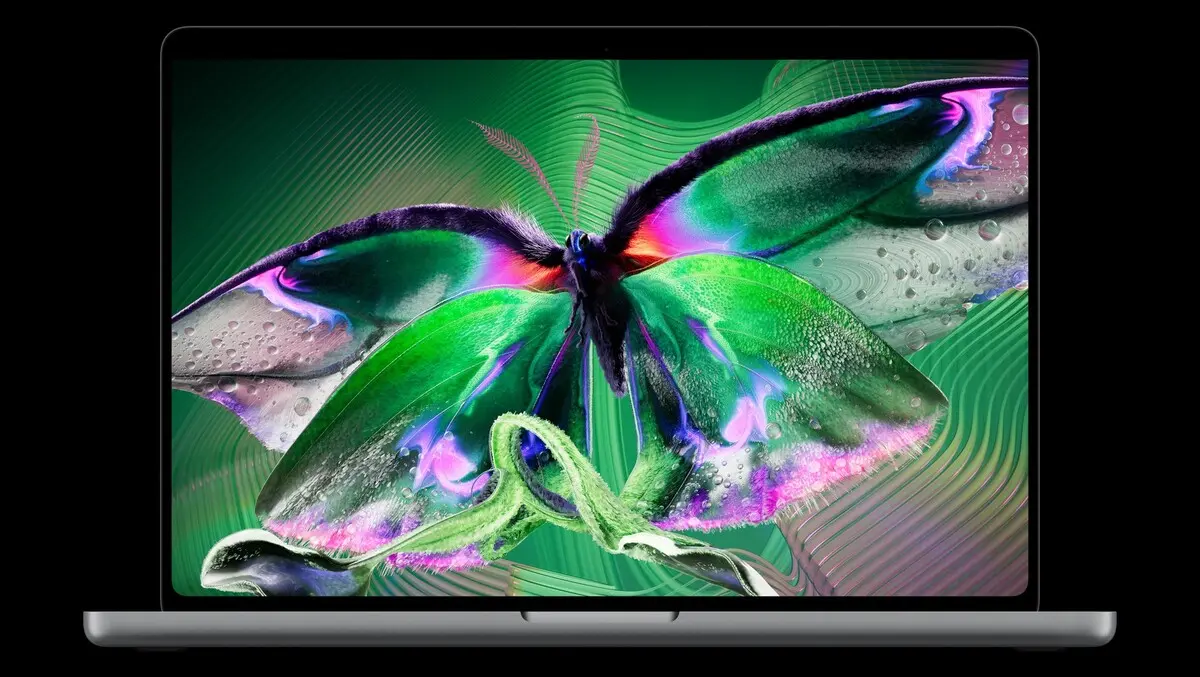
Apple has unveiled a new MacBook Pro with an OLED display and touch input, marking the first time touch controls have come to the Mac.
The new MacBook Pro comes in 14-inch and 16-inch versions. It introduces what Apple calls its PROLED XDR display alongside M5 Pro and M5 Max chips. Apple says the machines offer up to 24 hours of battery life, a thinner and lighter chassis, and storage of up to 16TB.
Built on tandem OLED technology, the display is aimed at professional users in photography, design and video work. Apple says it delivers up to 2,000 nits of peak HDR and SDR brightness, a 10,000,000:1 contrast ratio, and support for both the P3 and Adobe RGB colour spaces.
Touch is the other major change. Users will be able to interact directly with the screen for tasks such as scrolling, zooming, arranging slides, drawing, testing apps and using software instruments. Apple says the touch sensor is integrated into the display panel rather than added as a separate layer.
A redesigned hinge is intended to improve stability during touch use. Apple also says the camera feed can be stabilised automatically during video calls when the screen is being touched.
The Mac also gains Apple's Dynamic Island interface, previously seen on the iPhone. On the MacBook Pro, it acts as a home for Spotlight, Live Activities and Siri AI, allowing users to surface searches, updates and controls from the top of the screen.
Hardware changes
Both sizes are lighter than before. Apple says the 14-inch model now weighs 3 pounds, while the 16-inch version weighs 4 pounds. The larger model is nearly a millimetre thinner, while the smaller model is half a millimetre thinner.
Internally, the new notebooks use M5 Pro and M5 Max processors aimed at demanding workloads, including software compilation, AI tasks, 3D graphics, visual effects, music production and 8K video editing. Memory rises to 128GB.
Apple also highlighted graphics updates, including enhanced shader cores, a third-generation ray-tracing engine and support for Dynamic Caching. Those changes are intended to improve performance in applications such as Blender, Unreal Engine and Cinema 4D.
Connectivity includes three Thunderbolt 5 ports, HDMI, an SDXC card slot, MagSafe and a headphone jack. The machines also support Wi-Fi 7 and Bluetooth 6, and can drive up to three external displays with M5 Pro and up to four with M5 Max.
Software focus
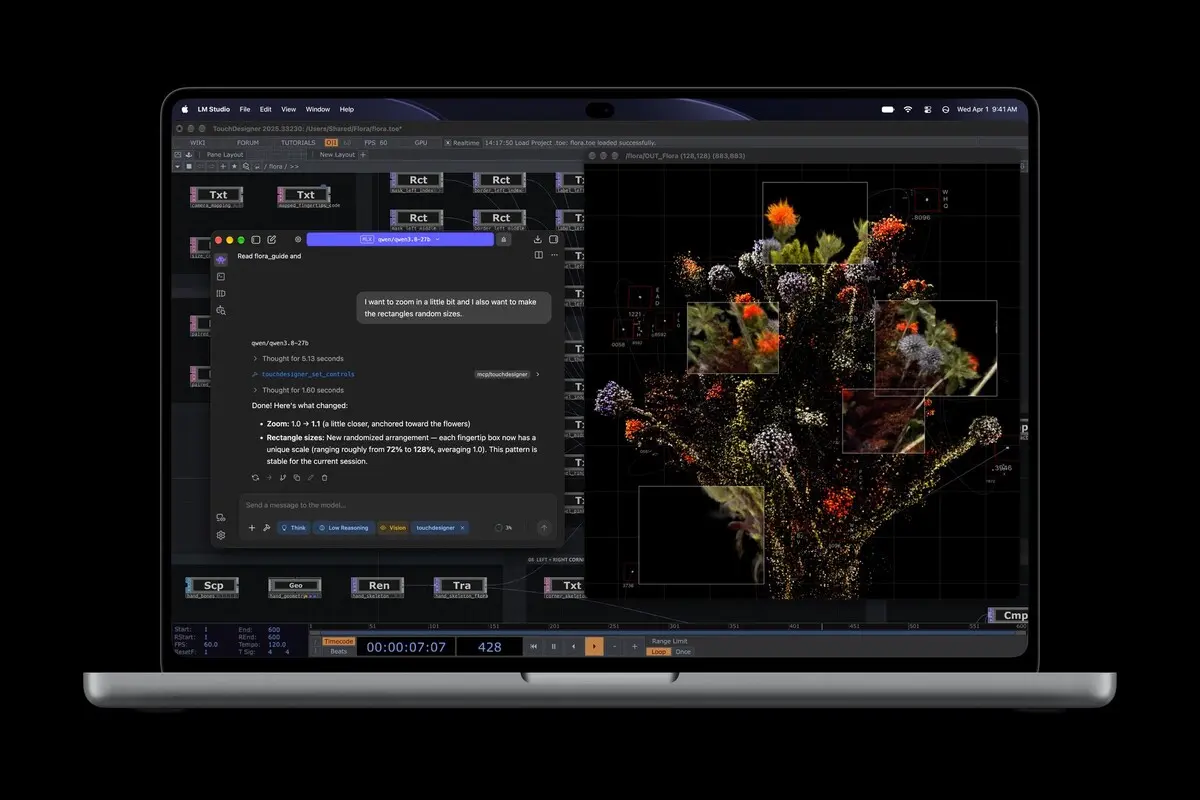
The laptops ship with macOS 27 Golden Gate, which Apple says has been adapted for touch use. The software also includes Siri AI and a broader set of Apple Intelligence features, including tools in Safari, Shortcuts and Photos.
Apple says many existing applications will work with touch immediately because macOS can translate touches into clicks. It also listed a range of third-party apps expected to take advantage of touch interactions, including products from Microsoft, Adobe, Blackmagic Design, Blender, Maxon, Shapr3D and Algoriddim.
Apple is also updating its own creative tools for the new interface. It says Apple Creator Studio, Pixelmator Pro, Logic Pro and Final Cut Pro will all include touch-based workflows, from drawing on a canvas to tapping out chords and adjusting edits on a timeline.
Pricing and market
In New Zealand, the 14-inch MacBook Pro with M5 Pro starts at $5,799, while the 16-inch version starts at $6,799. Models with M5 Max start at $8,999 for the 14-inch machine and $9,599 for the 16-inch version.
The move brings Apple closer to touchscreen laptop designs that have long been standard in parts of the Windows market, while preserving the MacBook Pro as its flagship notebook line for professional users. It also gives Apple a more direct way to align Mac interaction with touch-based software patterns already established on the iPhone and iPad.
Johny Srouji, chief hardware officer at Apple, described the launch as a major shift for the product line. "The new MacBook Pro with PROLED XDR Display is a monumental step forward for the Mac. PROLED XDR is the world's best laptop display. It pairs state-of-the-art tandem OLED technology with advanced algorithms in our display engine to deliver the kind of visual fidelity pros have been dreaming of. And with the magic of Touch coming to MacBook Pro, combined with the game-changing performance of M5 Pro and M5 Max, we've created a whole new way for pros to interact with their content, taking their workflows to a completely new level. The new MacBook Pro is the result of the deep integration between Apple silicon, hardware, and software, and there's simply nothing else like it," Srouji said.